In the rapidly evolving landscape of Union City, Georgia, healthcare providers face a unique environmental challenge. While the Highway 138 Healthcare District and the Highway 29 Healthcare Hubs serve as vital centers for patient care, their proximity to the Shannon Industrial Corridor introduces a complex variable: industrial particulate load.
Unlike suburban clinics in isolated environments, Union City medical facilities are subject to high volumes of airborne dust, diesel exhaust particulates, and micro-debris generated by one of the Southeast's busiest logistics hubs. This particulate load does not just settle on lobby floors; it infiltrates HVAC systems, settles on high-touch clinical surfaces, and complicates the maintenance of a sterile environment.
The Intersection of Clinical Precision and Industrial Reality
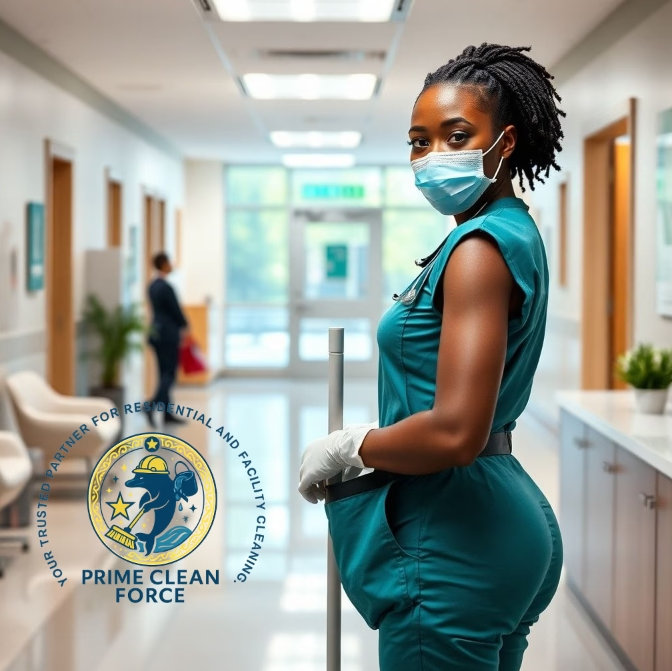
At Prime Clean Force, we have developed the "Emerald Sector" protocol, a technical approach to medical sanitation that goes beyond visual cleanliness to address the microscopic reality of healthcare environments within industrial zones. Our standards are designed for Union City's specific soil loads, combining CDC-aligned disinfection with advanced HEPA-filtered particulate management.
Pathogen Control
EPA-registered List N disinfectants applied with strict adherence to manufacturer-specified dwell times to eliminate MRSA, Norovirus, and respiratory pathogens.
Particulate Control
HVAC & HEPA Hygiene
Addressing the Shannon Parkway dust load through 4-stage HEPA filtration and microfiber encapsulation, preventing cross-contamination from the logistics corridor.
The Shannon Industrial Corridor Affect: A Clinical Perspective
For medical practices located near Union City's vast distribution centers, the "dust" found on windowsills and in lobbies is often more than just soil. It is a mixture of tire rubber particles, diesel soot, and warehouse debris. In a clinical setting, these particles act as vehicles for microbial life.
Effective sanitation in these zones requires a two-pronged strategy:
- Source Capture: Utilizing high-efficiency particulate air (HEPA) vacuums that capture 99.97% of particles down to 0.3 microns. Standard commercial vacuums often exhaust the very particulates you are trying to remove, keeping them suspended in the clinical air.
- Microfiber Encapsulation: Using split-fiber microfiber technology that carries a permanent electrostatic charge to trap dust rather than redistributing it. Our color-coded system ensures that tools used in the lobby never enter the surgical or examination suites.
The Science of Dwell Time: Why 30 Seconds Is Not Enough
In the rush of a high-volume medical office, the temptation to "spray and wipe" is high. However, clinical disinfection is a chemical process that requires time. Most EPA-registered disinfectants require a 2, 5, or 10-minute wet-contact time, referred to as "dwell time," to achieve their stated kill claims.
In Union City's healthcare hubs, where high patient turnover is common, we implement Documented Dwell-Time Workflows. Our technicians are trained to work in zones, allowing the chemistry to do the work before the physical removal of the cleaning agent. This is not just a cleaning preference; it is a requirement for maintaining the high-authority status of your facility.
The Union City HUD Case Metric
Specialized Cleaning for Highway 138 & 29 Healthcare Hubs
Whether your practice is a dental clinic, a primary care provider, or a specialized surgical center, the floor plan of your facility dictates the sanitation protocol. We divide the medical environment into three distinct risk categories:
Category 1: Public & Transitional Spaces
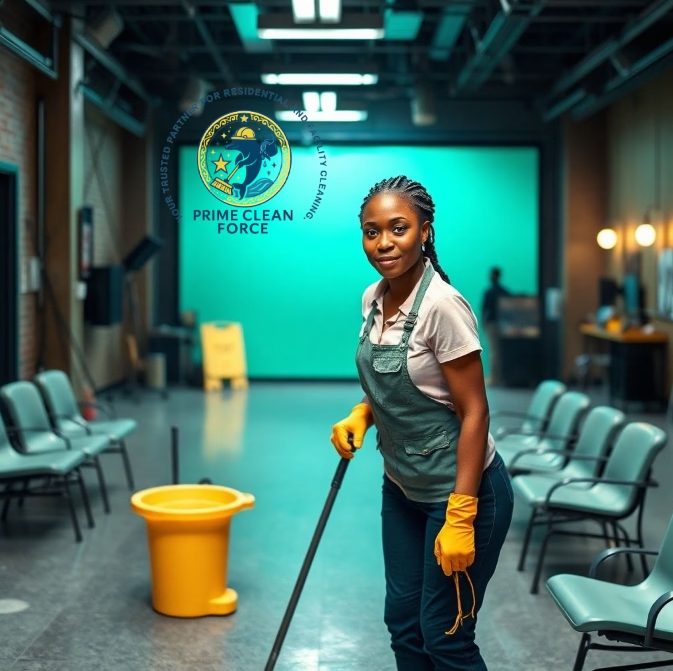
The lobby and greeting areas are the frontline of your environmental control. In Union City, these areas bear the brunt of the external industrial soil load. Our focus here is on high-frequency touchpoint disinfection (kiosk screens, door handles, chair arms) and high-volume air scrubbing via HEPA-filtration units where necessary.
Category 2: Clinical & Exam Rooms
These areas require sterile discipline. We employ "Surgical Clean" protocols, which include the disinfection of exam tables, cabinet hardware, and medical grade flooring. The use of hospital-grade disinfectants is mandatory, with specific attention to cross-contamination prevention between patient visitations.
Category 3: Sterile Processing & Specialty Suites
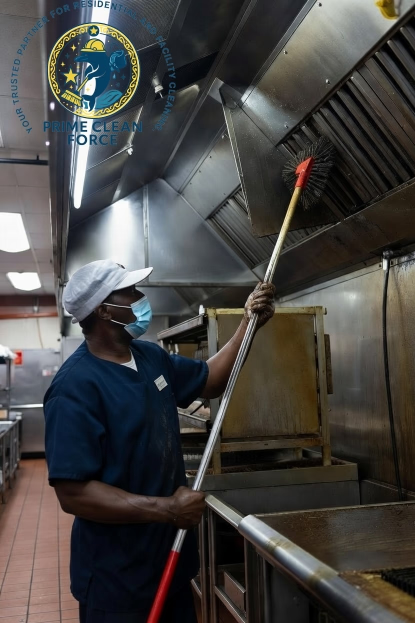
For dental offices and surgical suites, the terminal clean is the standard. This involves a top-down approach, starting with ceiling vents and light fixtures (where industrial dust loves to accumulate) and ending with floor-level disinfection. Every surface is treated as a potential site for microbial growth.
Operational Constraints & Access Windows
Operational constraints that shape timing, access, and scope for this service line.
- Room turnover aligns to appointment flow and check-in peaks.
- Dwell-time windows honored for sanitizer contact.
- Restricted clinical areas require authorized access.
- Touchpoint resets prioritize waiting rooms and exam suites.
Clinical Protocol Matrix
Our protocol matrix translates facility zones into clear sanitation standards. Final scopes are customized after a walkthrough.
| Zone | Clinical Challenge | Prime Standard |
|---|---|---|
| Public & Transitional | High particulate load and continuous touchpoints | High-touch disinfection + HEPA capture support |
| Clinical & Exam Rooms | Cross-contamination risk and sterile discipline | Surgical clean protocols with hospital-grade disinfectants |
| Sterile Processing & Specialty | Terminal cleaning requirements and dust on fixtures | Top-down terminal clean with vent and light detailing |
Clinical Sanitation FAQ
How do you mitigate warehouse dust from reaching our clinical areas?
We implement a three-stage entry strategy. This includes high-tack entrance mats to capture gross particulates, air-pressure monitoring advice, and 4-stage HEPA filtration during our nightly cleaning cycles to remove any micro-dust that has bypassed your primary filtration.
Do you provide documentation for health department or accreditation audits?
Yes. Every cleaning cycle is documented with a digital timestamp and checklist performance. For medical clients, we provide Certificate of Sanitation logs that track chemical batch numbers and dwell-time compliance, ensuring you are audit-ready at all times.
What specific pathogens do your protocols target?
Our primary targets include MRSA, C. diff (with sporicidal agents), Streptococcus, Norovirus, and respiratory viruses like Influenza and COVID-19. We use EPA List N and List K products depending on your facility's specific risk profile.
Are your staff trained in Bloodborne Pathogen (BBP) standards?
All Prime Clean Force medical-tier technicians undergo annual OSHA Bloodborne Pathogen training. They are equipped with the knowledge and PPE required to handle medical waste protocols and specialized clinical spills safely and effectively.
The Prime Clean Force Difference: Documented Authority
In Union City, where the growth of the healthcare sector is matched only by the growth of the logistics sector, choice in janitorial partners is an operational decision. A standard office cleaner lacks the technical depth to manage a clinical environment subject to environmental stressors.
By choosing Prime Clean Force, you are selecting a team that understands the Highway 138 Healthcare District. We are not just cleaning floors; we are protecting your staff, your patients, and your professional reputation. Our "Emerald Sector" medical branding is a promise of transparency, data-driven results, and unwavering clinical standards.
Related Union City Resources
Outpatient volume forces faster reset cycles, which overlap with front-office standards, turnover preparation for nearby units, and industrial particulate control across the corridor.